Many of the families we work with come to us after years of searching for answers. They have tried specialists, therapies, diets, supplements, medications, and just about everything else they can think of, yet they still feel like something is missing. Others find us much earlier in their journey. They are beginning to notice symptoms emerge and want to better understand what may be happening before spending years guessing their way through the process. What makes this work so rewarding is watching families begin to connect the dots. They start understanding their child’s symptoms differently, feeling more hopeful about the future, and gaining confidence in the decisions they make moving forward.
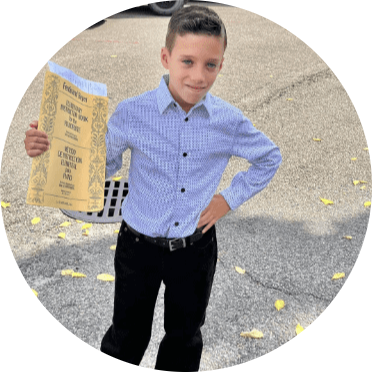
“We were told to ‘ignore it’ but Alec’s tics were increasing. I spent countless nights researching until I saw Dr. Gibson’s fb group. We had an initial consultation and decided to do testing to see what was happening on the inside. Once we started out protocol, Alec was tic free after 90 days! Piper and her team were the answers to my prayers. Alec is continuing to do great!”
~Sarah
“My son’s tics were so bad, he could not function. Dr. Gibson got us the data we needed. Almost 90 days later to the exact date, Joseph was tic free. My only regret is that I wish I would have done this sooner. Thank you for giving my child back!”
~Pina Prainito-Tedeschi
“I knew something was not right with Lily’s health. I was worried we were headed towards a slippery slope. Within two weeks of starting our protocol, her tics went away. She sleeps better at night. She’s not in this constant fight or flight high energy state anymore. Now, she’s my relaxed, fun, happy girl! I will be forever grateful for Dr. Gibson!”
~Sabrina
Behind every testimonial is a parent who was once searching for answers and wondering what to do next. We are honored to have walked alongside so many incredible families and grateful they have allowed us to share a small part of their journey.
Meet Dr. Piper Gibson, PhD
Mom | Functional Medicine Practitioner | Founder of Regenerating Health
Before she was helping families professionally, Dr. Piper Gibson was a mother searching for answers for her own child.
Like many of the parents who find their way to Regenerating Health, she spent years trying to understand symptoms that didn’t fully make sense. What began as a tic disorder diagnosis eventually led her to uncover a much bigger story involving neurological, behavioral, digestive, and other health challenges that seemed connected in ways no one was helping her understand.
Determined to find answers, Dr. Gibson immersed herself in the study of functional medicine, nutrition, genetics, neuroscience, and systems biology. What began as a mother’s search for answers became a lifelong passion and the foundation of her professional work.
Today, she helps families move beyond labels and symptom management to better understand the patterns and contributors that may be impacting their child’s health. Having walked this path herself, Dr. Gibson understands the frustration, uncertainty, and hope that come with searching for answers when symptoms don’t fully make sense.
Determined to find answers, Dr. Gibson immersed herself in the study of functional medicine, nutrition, genetics, neuroscience, and systems biology. What began as a mother’s search for answers became a lifelong passion and the foundation of her professional work.
Today, she helps families move beyond labels and symptom management to better understand the patterns and contributors that may be impacting their child’s health. Having walked this path herself, Dr. Gibson understands the frustration, uncertainty, and hope that come with searching for answers when symptoms don’t fully make sense.
Does Any of This Sound Familiar?
Does Any of This Sound Familiar?
If your child has tics, you may have noticed they are not the only challenge your family is navigating. Many children with tics also experience anxiety, OCD tendencies, sleep challenges, sensory sensitivities, gut issues, emotional ups and downs, or symptoms that seem to come and go without a clear explanation. You may have been told these concerns are unrelated, that it’s “just anxiety,” or that your child will eventually grow out of it. Deep down, you may still feel like something is being missed. The most important question is if these symptoms could be connected.
Tics that seem worse after illness, stress, certain foods, or screen time
Anxiety, OCD behaviors, emotional meltdowns, or sudden mood changes
Sleep struggles, fatigue, or difficulty settling down
Frequent stomach aches, constipation, diarrhea, or other gut concerns
Sensory sensitivities, attention challenges, or difficulty regulating emotions
Symptoms that come and go, flare unexpectedly, or don’t seem to follow any clear explanation
How We Help Families Connect the Dots
How We Help Families Connect the Dots
Every child’s story is different, but symptoms rarely exist in isolation. Our approach is designed to help families better understand the bigger picture by looking at patterns, history, and potential contributing factors rather than focusing on a single symptom alone.
Step 1. Understand Your Child’s Story We begin by reviewing your child’s symptoms, health history, and timeline in detail. This helps us understand the full picture and identify important clues that may have been overlooked.
Step 2. Identify Underlying Patterns Rather than looking at symptoms in isolation, we look for patterns that may help explain why they are occurring. This includes evaluating how different systems of the body may be interacting and contributing to your child’s presentation.
Step 3. Create a Personalized Roadmap Every child is unique, which means the next steps should be too. We develop a personalized plan based on your child’s history, patterns, goals, and individual needs.
Step 4. Provide Ongoing Guidance Families receive continued support as they move through the process and implement recommendations. Our team helps answer questions, monitor progress, and make thoughtful adjustments along the way.
What If There Is More To The Story?
What If There Is More To The Story?
Many parents come to us because they see a variety of symptoms in their child, but still don’t feel like they understand why the symptoms are happening. They are often trying to connect the dots or questioning whether there may be pieces of the puzzle that haven’t been fully explored. If that sounds familiar, we’d love to show you how we approach these cases and help you determine whether our process feels like the right fit for your family.
During your complimentary case review, we will:
Learn more about your child’s unique story
Review symptoms, history, and important patterns
Discuss potential areas that may warrant further investigation
Answer your questions and outline possible next steps
Many parents come to us because they see a variety of symptoms in their child, but still don’t feel like they understand why the symptoms are happening. They are often trying to connect the dots or questioning whether there may be pieces of the puzzle that haven’t been fully explored. If that sounds familiar, we’d love to show you how we approach these cases and help you determine whether our process feels like the right fit for your family.
During your complimentary case review, we will:
Learn more about your child’s unique story
Review symptoms, history, and important patterns
Discuss potential areas that may warrant further investigation
Answer your questions and outline possible next steps
Our free Tic Disorder Cheat Sheet is a great place to start.
Many parents feel frustrated when symptoms continue changing, fluctuating, or overlapping in ways that do not fully make sense. Tics may be only one piece of the puzzle, while concerns such as anxiety, OCD tendencies, sensory sensitivities, sleep challenges, digestive issues, or emotional dysregulation are often present as well.
Inside this free guide, you’ll learn about common symptom patterns, questions many parents overlook, and the root-cause contributors we commonly see in children experiencing tics and related symptoms.
Whether you are just beginning your journey or looking for a better understanding of the bigger picture, this guide is designed to help families start connecting the dots in a calmer, more informed way.
Start with the Tic Disorder Cheat Sheet.
Many parents feel frustrated when symptoms continue changing, fluctuating, or overlapping in ways that do not fully make sense. Tics may be only one piece of the puzzle, while concerns such as anxiety, OCD tendencies, sensory sensitivities, sleep challenges, digestive issues, or emotional dysregulation are often present as well.
Inside this free guide, you’ll learn about common symptom patterns, questions many parents overlook, and the root-cause contributors we commonly see in children experiencing tics and related symptoms.
Whether you are just beginning your journey or looking for a better understanding of the bigger picture, this guide is designed to help families start connecting the dots in a calmer, more informed way.
Tic Talk: Common Misconceptions, Natural Approaches, and Real Conversations About Tic Disorders
When my son first developed tics, I spent years searching for answers. The more I learned, the more I realized many parents were being told what their child had, but not why symptoms might be happening in the first place.
Written from the perspective of both a mother and practitioner, Tic Talk explores common misconceptions about tic disorders and introduces a broader way of thinking about the patterns that often overlap with tics, including anxiety, OCD tendencies, sensory challenges, sleep issues, digestive concerns, and nervous system dysregulation.
Rather than focusing solely on symptom management, Tic Talk helps parents understand why a child’s symptoms may not exist in isolation and why seemingly unrelated challenges can sometimes be connected. The book offers a compassionate, practical starting point for families who want to move beyond confusion, ask better questions, and gain a deeper understanding of the bigger picture behind their child’s health.
Whether you are newly navigating a diagnosis or have been searching for answers for years, this book was written to help parents better understand what may be happening underneath the surface and begin connecting the dots behind tics, Tourette syndrome, and related symptoms.
If you’ve ever felt like you’re missing part of the story, this book was written for you.
Want Help Understanding Your Child’s Patterns More Specifically?
Want Help Understanding Your Child's Patterns More Specifically?
If you’ve spent months- or even years- trying different therapies, supplements, diets, medications, or specialists without fully understanding why these symptoms are happening, you’re not alone. Many of the families we work with arrive feeling exhausted, overwhelmed, and frustrated by how disconnected everything seems.
What we often find is that these symptoms may not be separate problems at all. They may be pieces of a larger story. Until that bigger picture begins to make sense, it’s easy to stay stuck in an endless cycle of guessing. You don’t need more guessing. You need clarity.
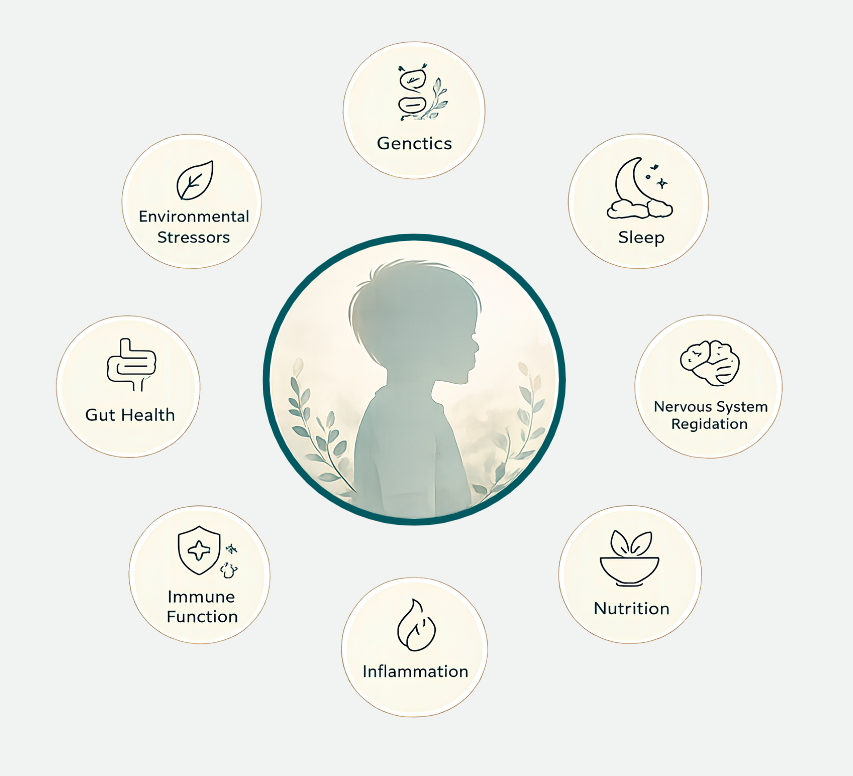
Many parents are surprised to learn that symptoms involving the nervous system are not always influenced by the brain alone.
What we commonly see is that multiple systems throughout the body may be interacting in ways that affect how a child feels, functions, and responds to the world around them.
While every child is unique, these are some of the areas we frequently explore when trying to understand the bigger picture behind complex symptoms:
These systems do not operate independently. They influence one another, which is why understanding the bigger picture matters.
What Can Life Look Like On The Other Side?
What Can Life Look Like On The Other Side?
When families first reach out to us, they are often exhausted. They’ve spent years trying to help their child. They’ve researched. They’ve changed diets. They’ve tried supplements. They’ve worked with specialists.
And many are left wondering: “Will my child always struggle like this?”
Years ago, Natalia was diagnosed with Tourette Syndrome and struggled with a long list of symptoms including tics, anxiety, OCD tendencies, sensory sensitivities, intrusive thoughts, emotional dysregulation, and more. Today, most people would never know what she used to deal with.
She graduated from high school. She drives independently. She sings on stage and in church. She works a client-facing job. She manages her own health decisions. Most importantly, she gets to enjoy being a young adult and living her life without the struggles that used to hold her back.
Her story is not just about symptom improvement. It’s about possibility. It’s about understanding that today’s challenges do not have to define your child’s future.
See how one family’s journey moved from confusion and fear to clarity, confidence, and hope.
Imagine Having More Clarity About What Is Happening
Most families who come to us have already tried a lot. They’ve researched, changed diets, experimented with supplements, visited specialists, and spent countless hours searching for answers. What they’re really looking for is not another quick fix. They’re looking for a clearer understanding of why symptoms may be happening and what steps make the most sense moving forward. Over time, many families begin noticing meaningful improvements in areas such as:
motor and vocal tics
focus and attention
emotional regulation
anxiety
sensory sensitivities
confidence
day-to-day functioning
sleep
Most importantly, they move from feeling overwhelmed and uncertain to having greater clarity about what may be contributing to their child’s symptoms. When parents understand the bigger picture, they can stop guessing and start making decisions with greater confidence.
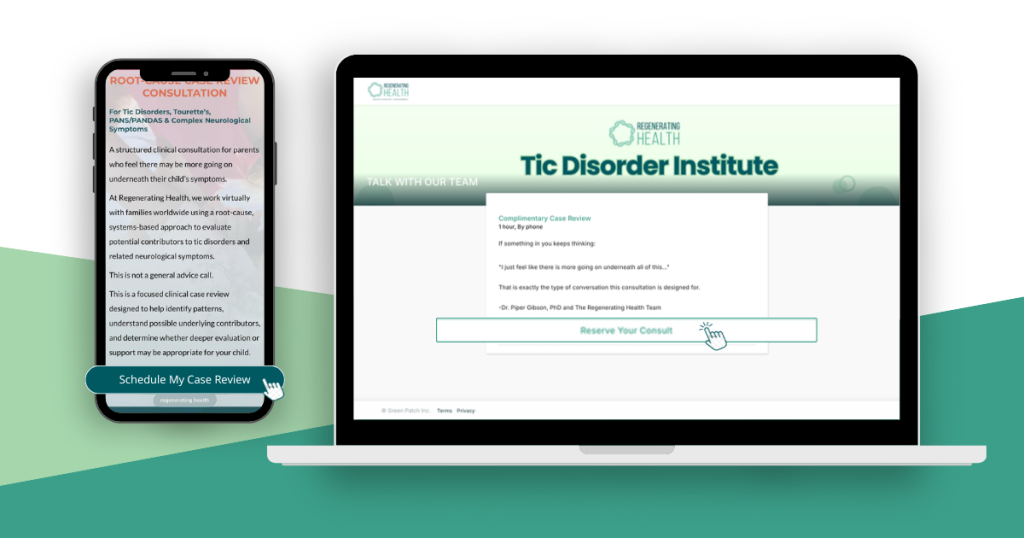
If you’re ready to better understand your child’s unique story, schedule a complimentary case review with our team.